
Resource Guarding Dog Training That Helps
- Wix

- Jun 24
- 5 min read
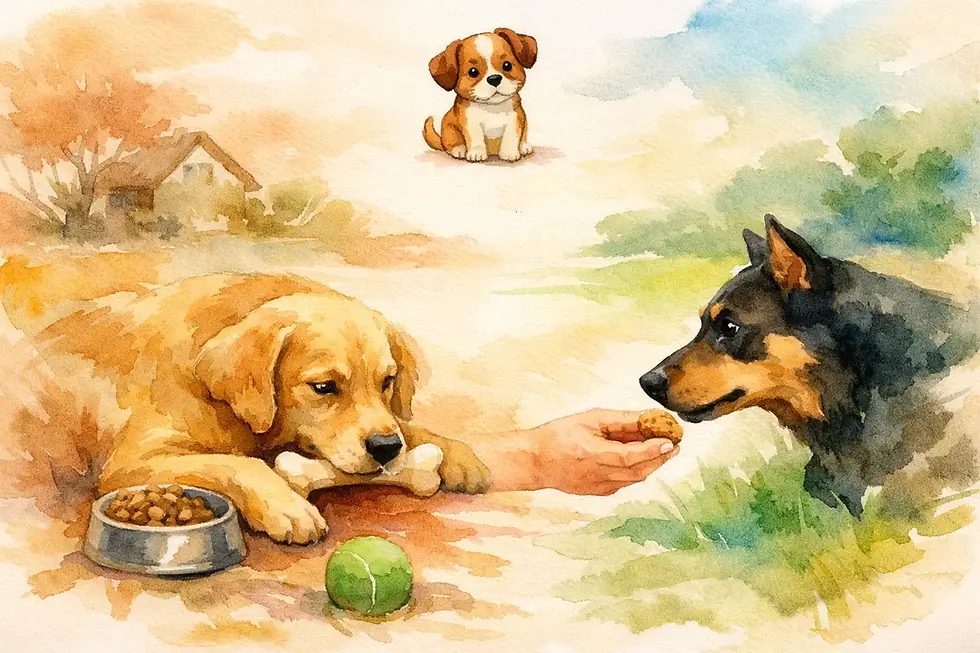
When your dog stiffens over a food bowl, snatches up a sock and dares you to come closer, or growls when someone passes the sofa, it can feel shocking very quickly. Resource guarding dog training is often something owners only search for after a moment that rattles them. One growl, one snap, one child reaching at the wrong time, and home suddenly feels tense instead of relaxed.
That stress is real. It is also far more common than many people realise.
Resource guarding is when a dog feels the need to protect something they value. That might be food, chews, toys, stolen items, a bed, a doorway, or even a favourite person. Some dogs freeze and stare. Some lift a lip. Some rush in without much warning at all. The behaviour can look dramatic, but underneath it is usually about anxiety, not dominance or stubbornness.
That matters, because if the cause is fear of losing something important, force rarely solves it. In many cases it makes the dog feel even less safe, which can make the guarding stronger, faster, and harder to predict next time.
Why resource guarding dog training needs care
Owners are often told to take the item away, prove a point, or show the dog who is in charge. That advice can sound confident, but it can also set up exactly the confrontation you are trying to avoid. If your dog already feels worried about people approaching their food, toy, or resting place, repeated conflict can deepen the problem.
This is why resource guarding dog training needs to be handled carefully and with a clear plan. It is not just about stopping a growl. In fact, the growl is useful information. It is your dog saying they are uncomfortable. If that warning gets punished, some dogs simply stop warning and move straight to snapping.
For families, that can be especially upsetting. Many owners feel embarrassed admitting their lovely dog has started guarding. Others blame themselves because they think they have missed something obvious. Most of the time, though, the issue has built gradually. A dog may have always been a little tense around valued items, and only when life gets busier or more pressured does it become impossible to ignore.
What resource guarding can look like at home
Sometimes it is very obvious. A dog hovers over a bowl, hard-eyed and stiff, and growls when anyone goes near. Sometimes it is more subtle. They pick up tissues, children’s toys or shoes and race off, then become defensive when approached. Some guard space rather than objects, becoming tense when someone comes near the sofa, their bed, or their owner.
It can also vary depending on who is nearby. A dog may seem fine with one adult and not another. They may guard from visitors but not from family. They may only react if they are tired, overwhelmed, or already wound up from other stress in the day. That is one reason generic advice so often falls flat. The details matter.
A dog that guards a chew from adults is not necessarily dealing with the same picture as a dog that guards mum from the other dog in the house, or a dog that becomes possessive over found items on walks. The behaviour may share a label, but the triggers, intensity and risk can be very different.
Why trying to fix it yourself can backfire
The internet tends to make behaviour issues look simple. Swap this, practise that, repeat a few times, and everything should settle down. The reality is usually less tidy.
With guarding, timing matters. Distance matters. Who is involved matters. The value of the item matters. The dog’s history matters. Household routines matter. If any part of the setup is wrong, your dog may rehearse the very behaviour you are desperate to reduce.
That is why well-meaning owners often end up in a cycle of making short-term decisions that feel necessary in the moment. They grab a stolen item. They shout because a child is close by. They corner the dog because they panic. It is understandable, but over time it can increase mistrust on both sides.
If there is already growling, snapping, lunging, or tension around children or other pets, this is not the sort of problem to tackle casually. Safety has to come first, and so does a proper assessment of what is actually driving the behaviour.
The emotional toll on owners
One of the hardest parts of resource guarding is how quickly it changes the mood in a home. People start walking on eggshells. You find yourself scanning the floor for dropped items. You worry when guests come round. You tense up when your dog settles with a chew in the corner. If children are involved, that worry gets heavier.
Many owners also feel grief alongside the stress. They love their dog deeply, but they no longer feel fully relaxed around them in certain moments. That can bring guilt, frustration and confusion, especially if the dog is affectionate and well behaved in every other part of life.
This is exactly why calm, professional support can make such a difference. Not because you have failed, but because behaviour like this needs a plan that fits your dog, your home and your level of risk.
What professional resource guarding dog training should focus on
Good support should not be about blame or bravado. It should be about understanding what your dog is protecting, what predicts the guarding, how intense it has become, and what needs to change around them to make progress feel safe and realistic.
That usually includes careful behaviour assessment, management to reduce flashpoints, and a structured approach that builds a better emotional response rather than forcing compliance. Just as importantly, it should give the owner confidence again. When you know what is happening and why, the whole problem feels less chaotic.
This is also where one-to-one support is often far more useful than broad advice. Resource guarding can look similar on the surface while being completely different underneath. A professional can spot patterns that owners understandably miss because they are living in the middle of the stress.
At ABC Puppy and Dog Training, this kind of issue is approached with positive reinforcement and a personalised plan, because the goal is not just fewer incidents. The goal is a dog you can live with more comfortably and a household that feels calm again.
When to get help sooner rather than later
If your dog has guarded food, toys, stolen items, furniture, or people, it is worth taking seriously even if the behaviour seems occasional. If there has been a snap, a bite, or any guarding around children, get support sooner. The same applies if you have multiple dogs in the home and tension is building around chews, sleeping places or attention.
Early support can prevent a pattern becoming more ingrained. It can also reduce the risk of someone trying a piece of outdated advice that pushes the dog further into defensive behaviour.
For owners in Dundee, Monifieth, Broughty Ferry, Carnoustie or Arbroath, having local one-to-one help can make the process feel much more manageable. You do not need more conflicting opinions. You need a clear path forward, tailored to the dog in front of you.
Resource guarding does not mean your dog is bad, and it does not mean things are hopeless. It means your dog is struggling around something they value, and that struggle deserves proper support. The sooner you stop battling the symptom and start addressing the behaviour with expert help, the sooner home can start to feel peaceful again.


Comments